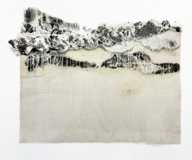
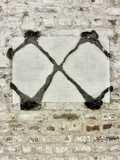
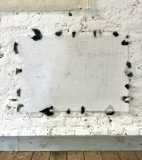
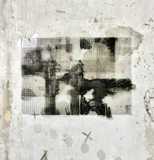
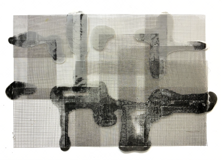
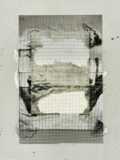
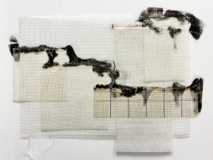
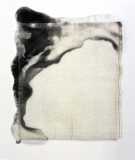
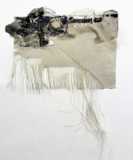
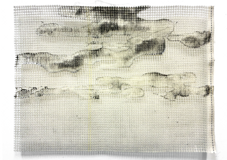
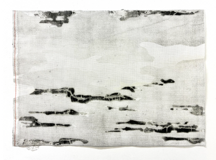
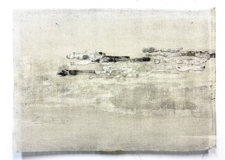
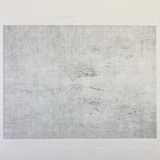
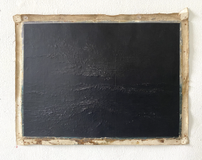
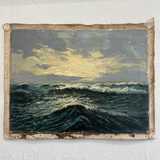
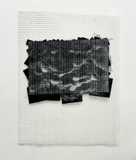
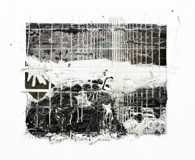
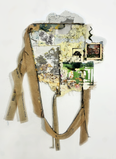
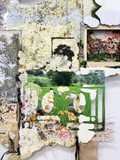
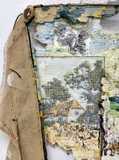
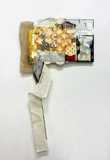
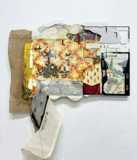
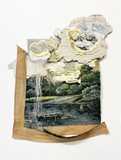
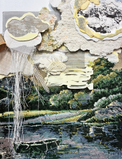
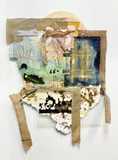
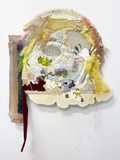
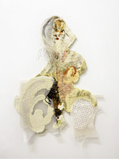
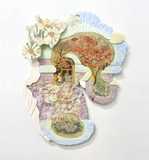
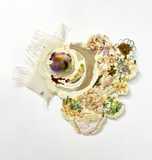
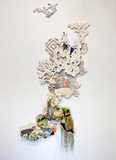
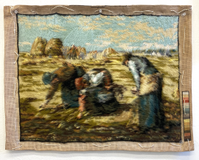
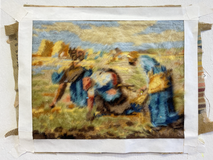
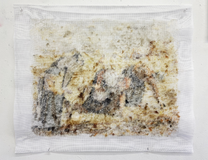
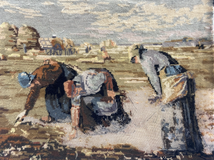
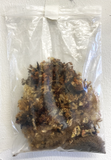
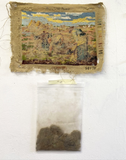
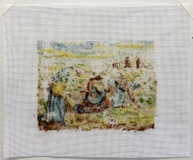
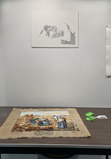
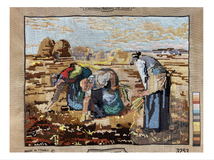
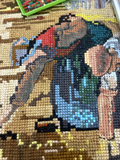
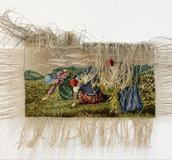
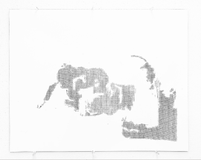
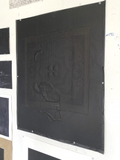
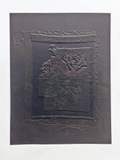
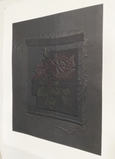
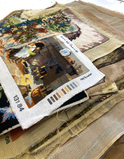
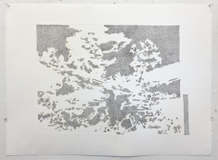
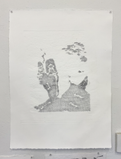
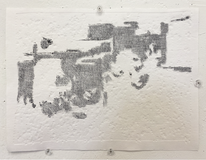
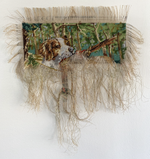
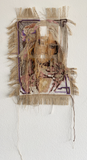
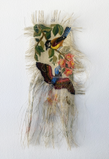
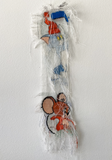
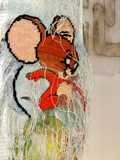
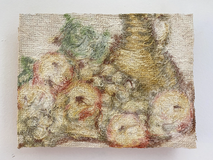
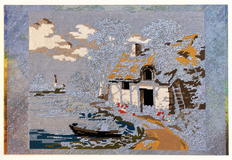
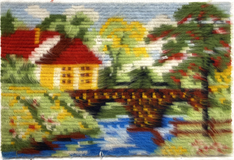
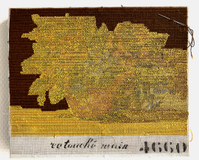
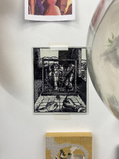
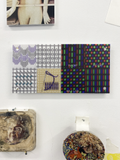
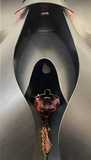
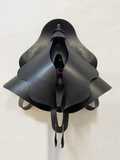
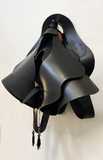
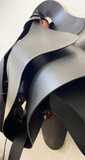
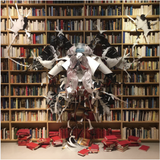
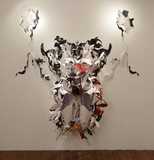
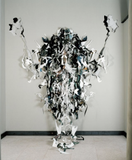
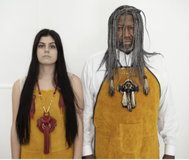
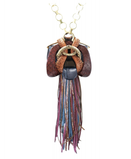
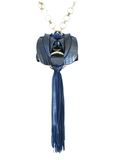
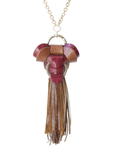
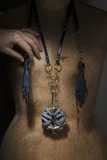
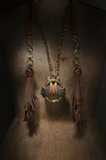
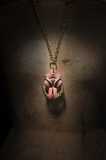
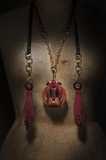
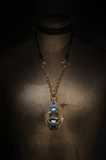
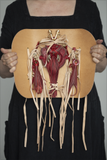
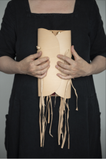
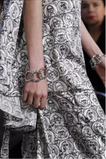
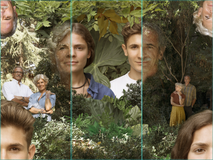
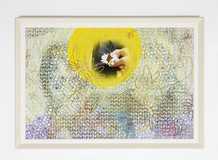
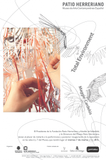
The archive traces the movement of my studio over the past twenty-seven years: from an early body of work grounded in family snapshots (1999–2018) to a more recent immersion in vintage needlepoint, painting, printmaking, and experiments with process, surface, and resin-based assemblage (2018–present), a period that also includes collaborations and side projects with fashion houses, as well as a long-standing, hands-on engagement with leather craft. If you are here to see my leather Neck Pieces, just click on the CARDELÚS On The Body at the top of the page.
What looks like a transition in materials is, at its core, a continuous investigation. For twenty years, I worked with photographic images not as a photographer but as someone who pressed against photography from within — against its claim to transparency, its collapse of time into a single moment, its tendency to substitute the image for the thing. The new work may be where that same pressure has found different, perhaps freer, ground: resin as fixer, the needlepoint grid as reproductive system, the recurring image as something to be gleaned rather than resolved.
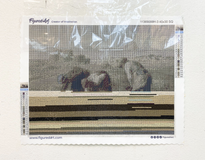
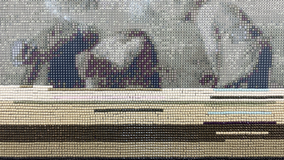
While the materials and forms have changed, certain concerns persist. I resist surface when it functions as a form of erasure, approaching it instead as a threshold — something to be entered, stressed, altered, and pushed into depth, relief, or volume, where labor, duration, and material pressure remain visible. In recent work, vintage needlepoint emerges as a pixelated, proto-algorithmic surface, generating assemblages that function as residues of operational systems — structures that still shape material outcomes even after belief in their organizing logic has eroded.
Many of the materials I work with were made by other hands; engaging them becomes a dialogue across time with unknown makers, attentive to the decisions, errors, and gestures they left behind. I find myself returning again and again to the same questions: how images change over time; how surfaces, grids, repetition, and reproduction operate; how value and labor are distributed; how inherited, often undervalued craft traditions might be re-read and re-coded; and how structures continue to shape outcomes and materials even after we stop trusting them to make sense of the world.